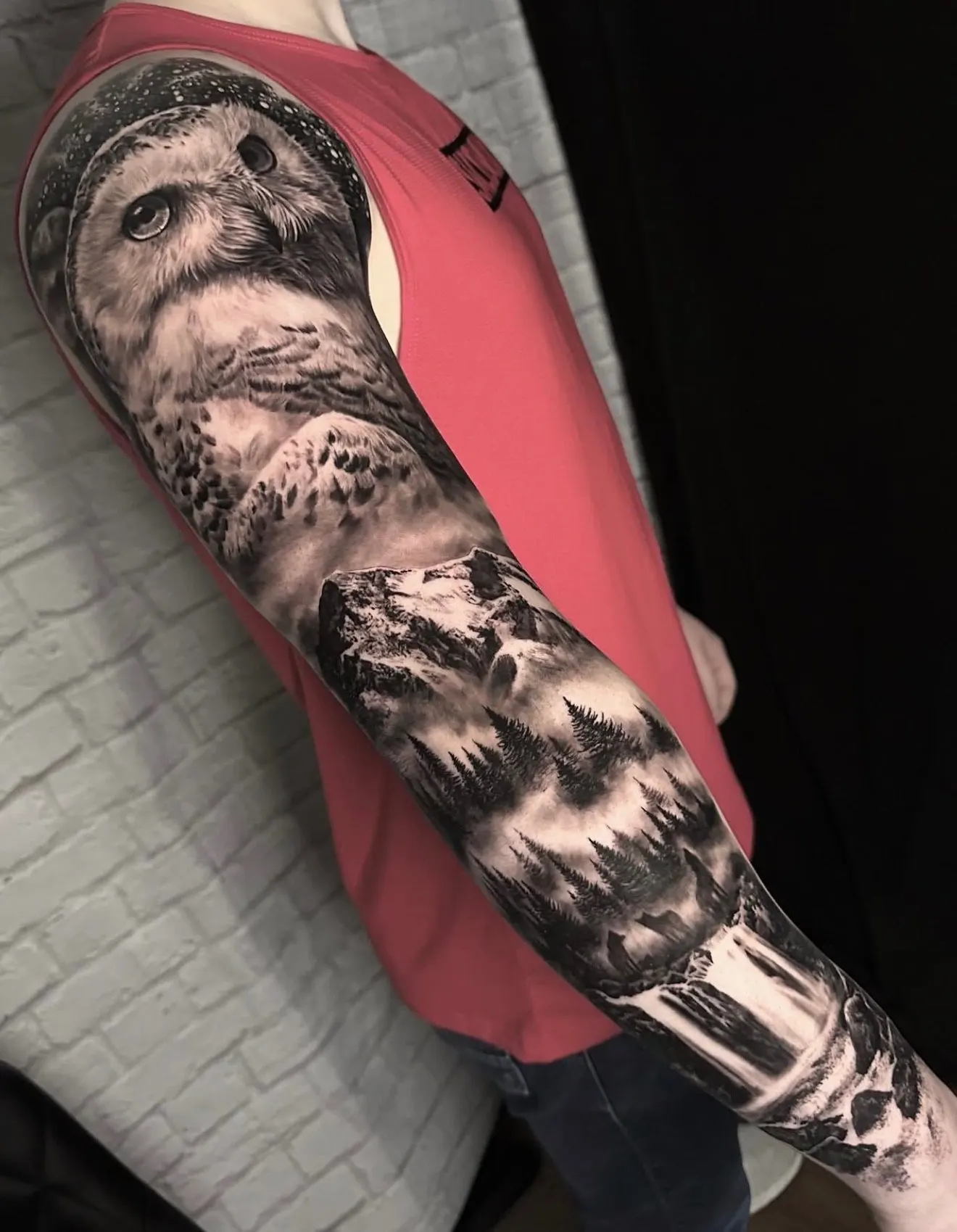
A realism tattoo is an investment in time and money. Looking after it properly, both while it heals and for years after, is what keeps the detail sharp.
The first few weeks
Follow your artist’s aftercare exactly. Keep it clean, use a thin layer of balm, don’t pick it, and keep it out of pools, the ocean and the sun until it’s fully healed. See the aftercare guide for the details.
Sun is the big one
UV breaks down tattoo ink over time and is the main reason realism fades. Once healed, use a high SPF sunscreen every time your tattoo is in the sun, and cover up when you can. If you spend a lot of time on the water, this matters even more.
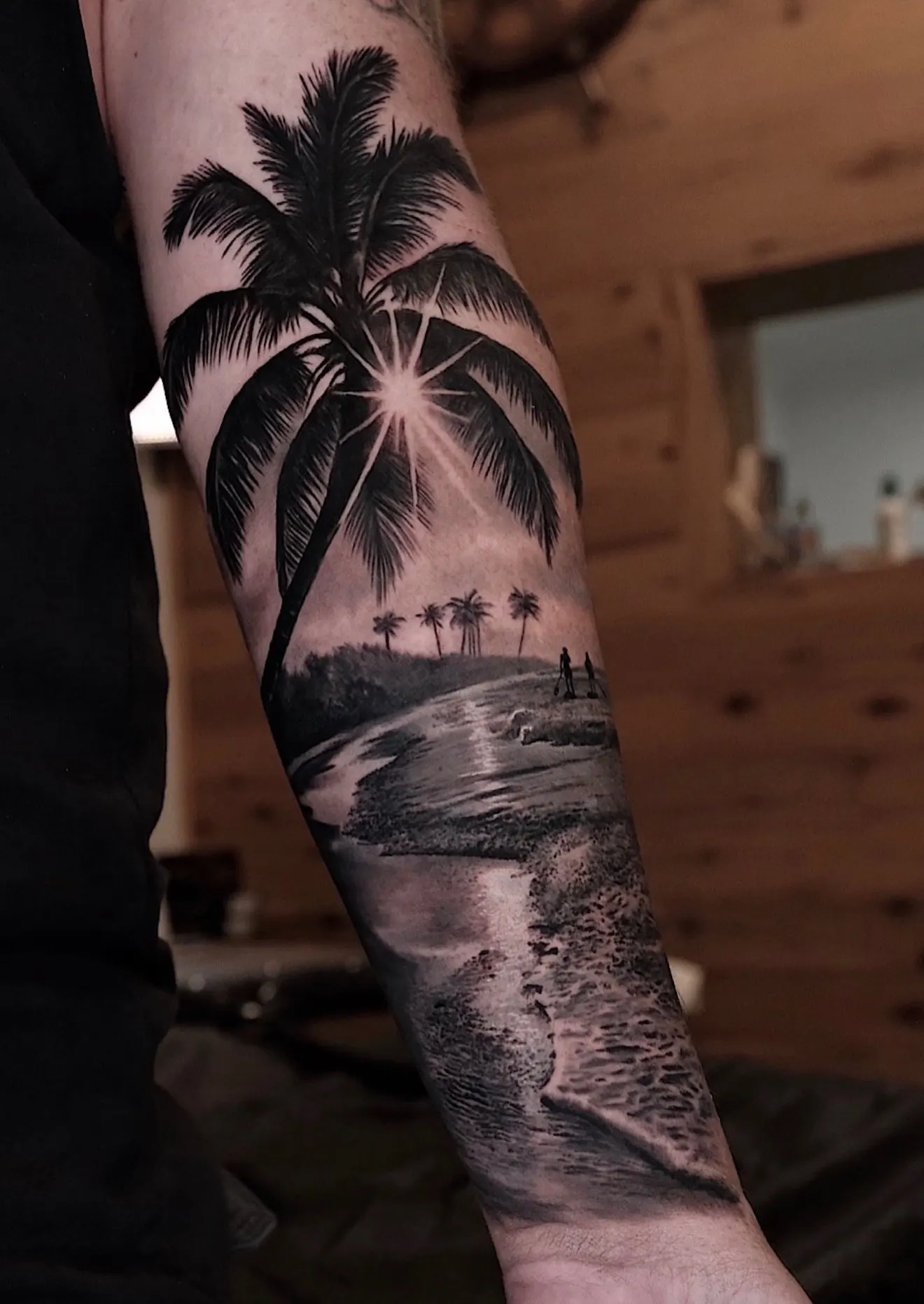
Healthy skin, better tattoo
Moisturised, hydrated skin shows a tattoo at its best. A plain, unscented moisturiser is all you need.
Design for longevity
Realism lasts best when it’s designed at the right size with strong contrast. Tiny detail packed into a small space blurs over the years. That’s why Dylan may suggest going a little bigger. Every piece is drawn to be read from a few metres away first and up close second, because that’s how skin ages: edges soften a little over the decades, and a design with clear shapes and real contrast stays legible while an overworked one turns to mush.
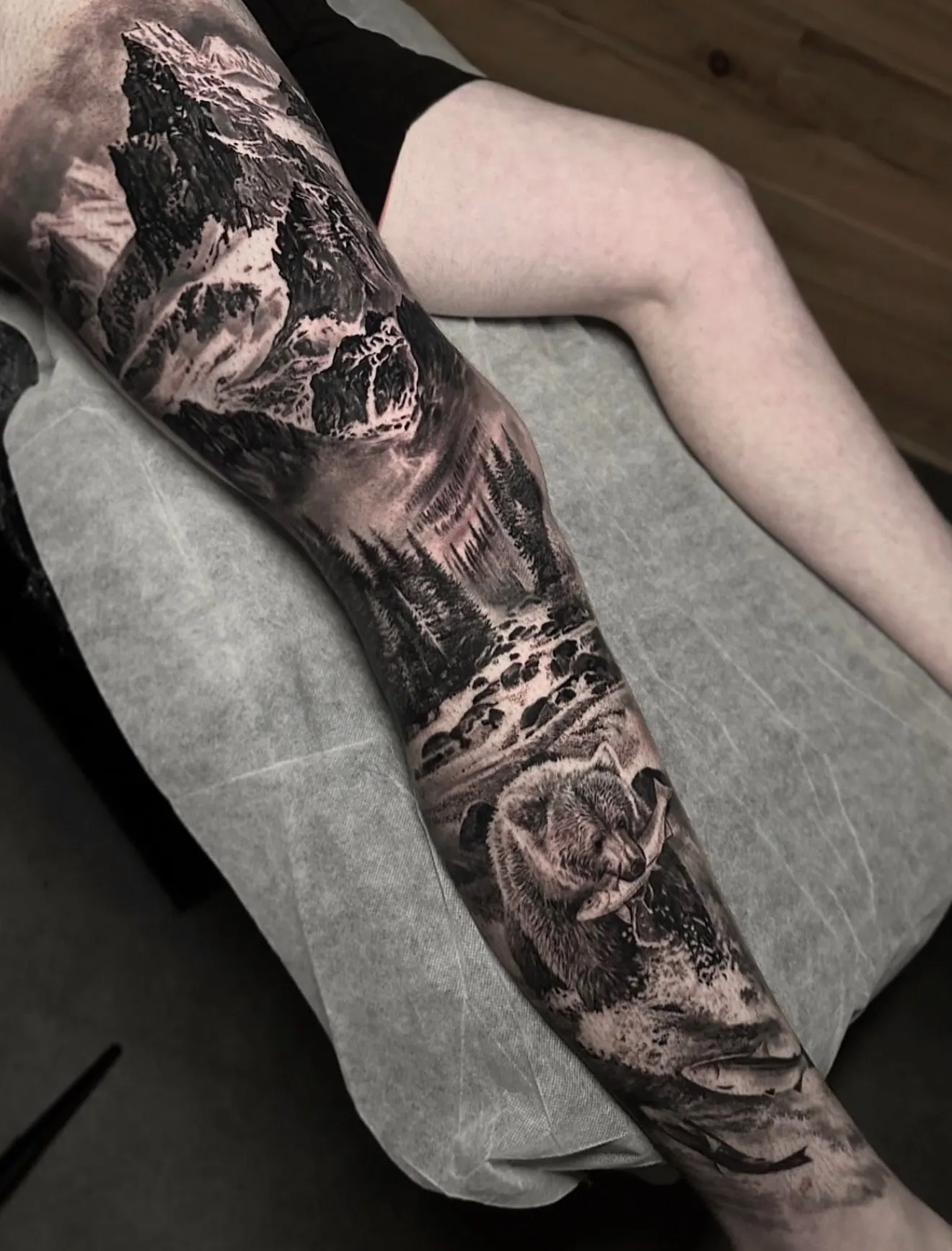
Touch-ups
Well looked-after realism rarely needs a touch-up in its first years. If an area has healed lighter than the rest, or a highlight has dropped out, send a healed photo at around eight weeks so it can be assessed properly. Small corrections are part of finishing a piece well, and it’s far better to fix a spot early than to wait until the whole tattoo has settled around it.
The habits that matter over years
Sunscreen every time the piece is exposed, moisturiser a few times a week, no sunbeds, and no picking at dry skin. People who work outdoors or spend their weekends on the water will see faster fading on uncovered areas, so a rash shirt or sleeve on long days is the cheapest insurance you can buy for a $2,000-a-day tattoo.
Weight, fitness and skin changes
Large weight changes and pregnancy stretch skin and can soften a tattoo slightly, mostly on the stomach, sides and upper arms. Muscle gain generally shows a piece off better. None of these are reasons not to get the work; they’re reasons to tell your artist about plans you already have so placement can allow for them.