The short answer
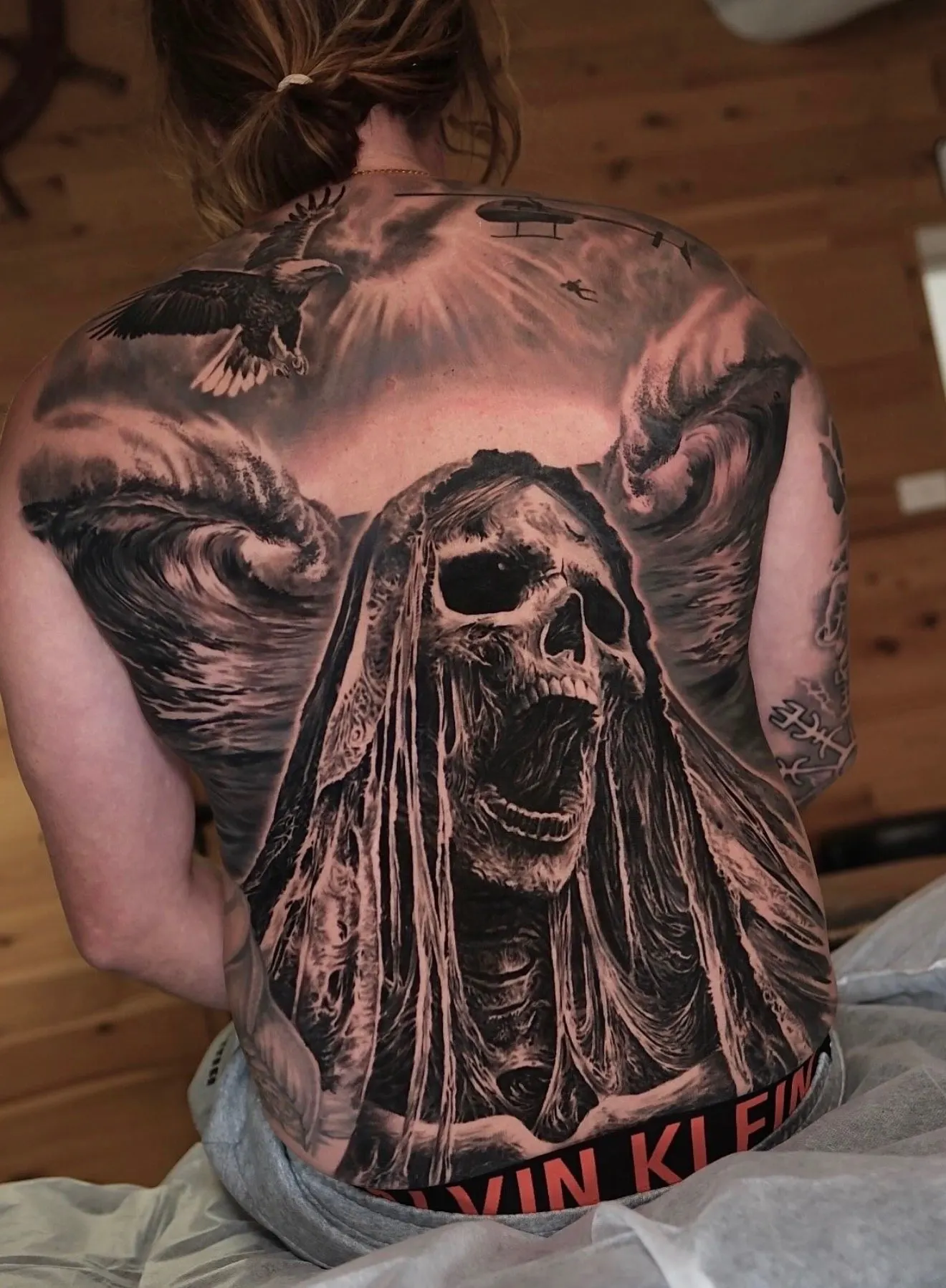
Most Australian tattoo studios charge by the hour, commonly $150 to $250 an hour in the capital cities, with a minimum charge of around $120 to $200 for small pieces. Large, detailed work like realism sleeves and back pieces is usually booked and priced by the full day instead. Dylan charges $2,000 AUD for a full day (7 to 8 hours) or $1,450 AUD for a half day (4 to 6 hours), and a full black and grey realism sleeve typically takes 4 to 6 full days.
“How much will it cost?” is the first question almost everyone asks, and it’s a fair one. The honest answer is that it depends on time, and time depends on size, detail, placement and the artist. This guide explains how tattoo pricing works in Australia, what typical prices look like for small pieces through to full sleeves, and how to budget for a large realism project without surprises.
How tattoo pricing works
There are four common ways studios price a tattoo, and many use more than one.
- Hourly rate: the most common model. You pay for the time in the chair, and the artist estimates how many hours your piece will take.
- Minimum charge: even a tiny tattoo takes setup, a stencil, sterile equipment and cleanup, so most studios have a minimum fee that covers about the first hour.
- Flat price per piece: common for small and medium designs where the time is predictable.
- Day rate: used by many realism and large-scale artists. You book a full day and pay a set amount, however much gets done. For big pieces this is usually the simplest and fairest way to price the work.
On top of the price, most artists take a deposit to hold your booking. It usually comes off the final cost of your last session. At Dylan’s studio the deposit is $300 per day booked, paid by card once your application is approved.
Typical tattoo prices in Australia
Prices vary a lot between cities, studios and artists, so treat these as ballpark figures, not quotes. They’re drawn from Airtasker’s 2026 Australian tattoo cost guide, which surveys typical studio rates.
| Tattoo | Typical time | Typical price |
|---|---|---|
| Small (palm-sized or smaller) | 1 to 2 hours | $120 to $300 |
| Medium (part of an arm, leg or chest) | 3 to 6 hours | $600 to $1,200 |
| Half sleeve | One or more long sessions | From around $700 to $900 |
| Full sleeve | Several 6 to 8 hour sessions | From around $1,200 to $2,000 |
| Back piece | Several full sessions | From around $1,200 to $2,500+ |
Those large-piece figures are starting points. A detailed realism sleeve or back piece almost always costs well above them, because realism takes far more hours than linework or simple shading. More on that below.
What it costs with Dylan
Dylan charges by the session rather than by the hour: $2,000 AUD for a full day (7 to 8 hours) or $1,450 AUD for a half day (4 to 6 hours). Anything shorter than a half day is quoted when you apply. Here is his rough guide to how long common projects take, with what that works out to at the full-day rate. Every body and design is different, so treat these as estimates, not quotes.
| Piece | Typical time | Estimate at $2,000 a day |
|---|---|---|
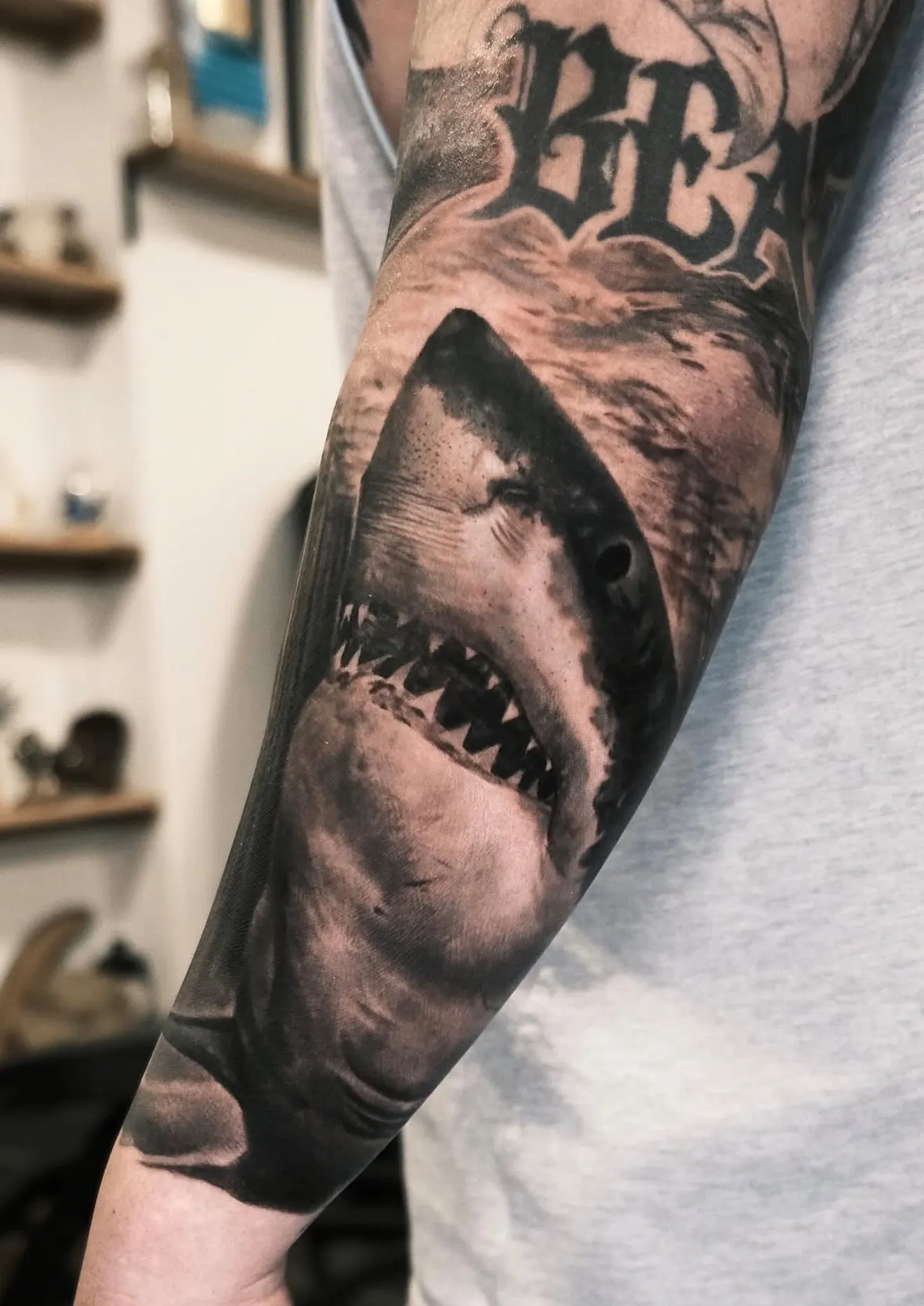
| Full sleeve, black and grey | 4 to 6 full days | $8,000 to $12,000 |
| Full sleeve, colour | 4 to 6 full days | $8,000 to $12,000 |
| Leg sleeve, black and grey | 6 to 8 full days | $12,000 to $16,000 |
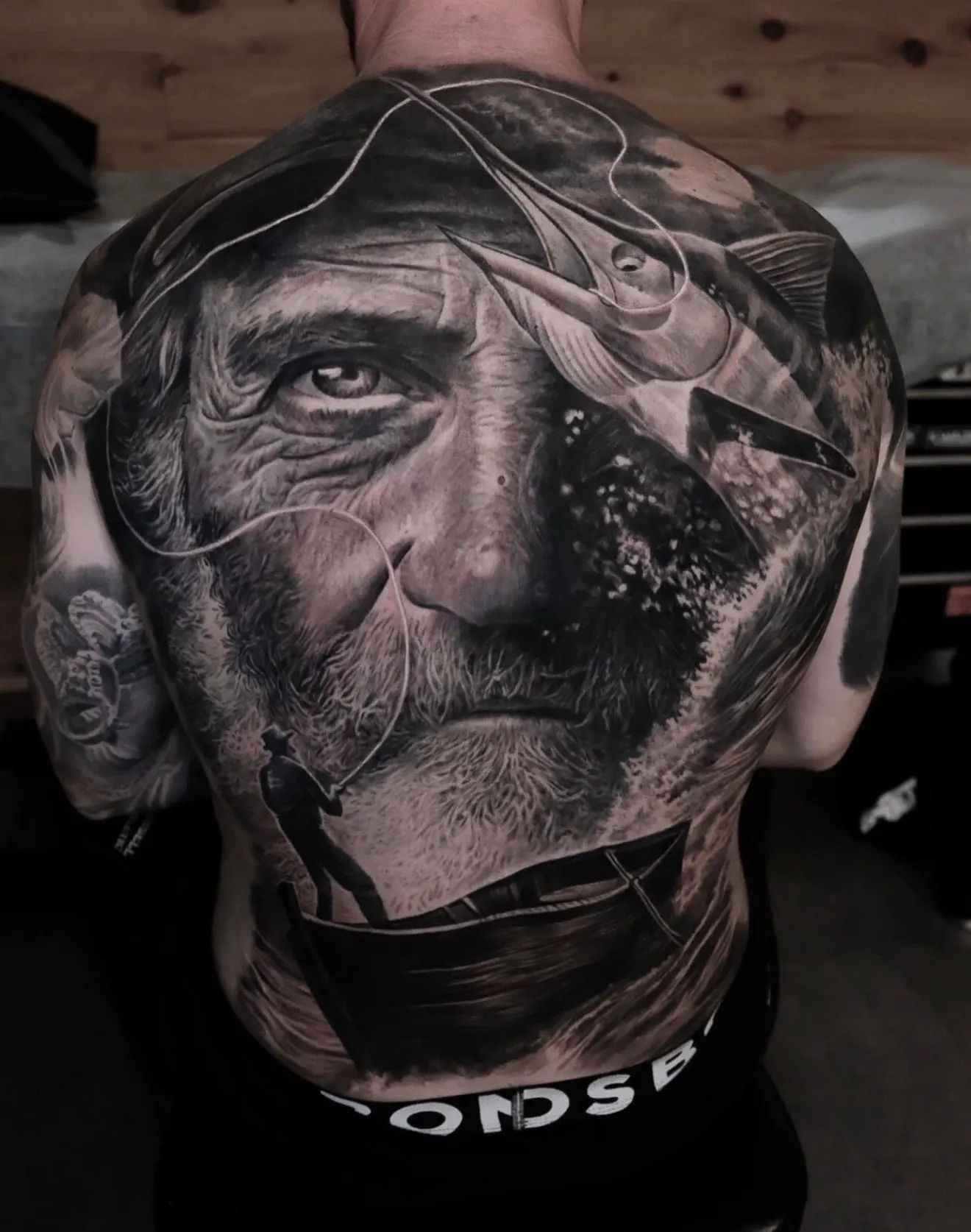
| Back piece, black and grey | 3 to 7 full days | $6,000 to $14,000 |
| Back piece, colour | 6 to 8 full days | $12,000 to $16,000 |
| Chest piece | 2 to 3 full days | $4,000 to $6,000 |
| Half sleeve (elbow to shoulder) | 2 full days | $4,000 |
| Full forearm, inner or outer | 1 full day | $2,000 |
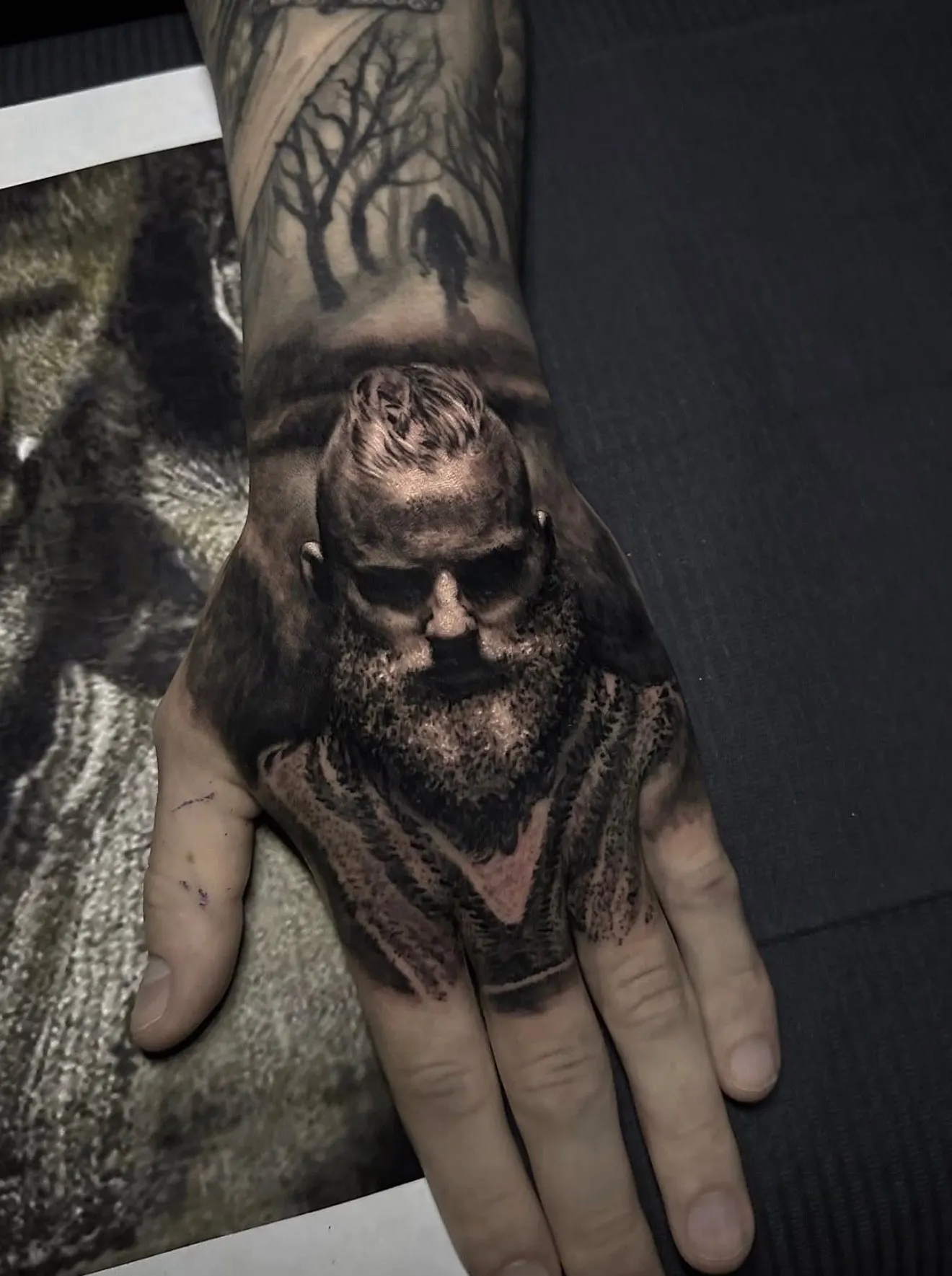
| Hand or foot piece | About 6 hours | Quoted per piece |
The full list, including calf socks, throats, ribs and thighs, is on the day rate and sessions page.
What affects the price of a tattoo
Size
Bigger takes longer. But size isn’t everything: a small, very detailed portrait can take longer than a larger, simpler design.
Detail and style
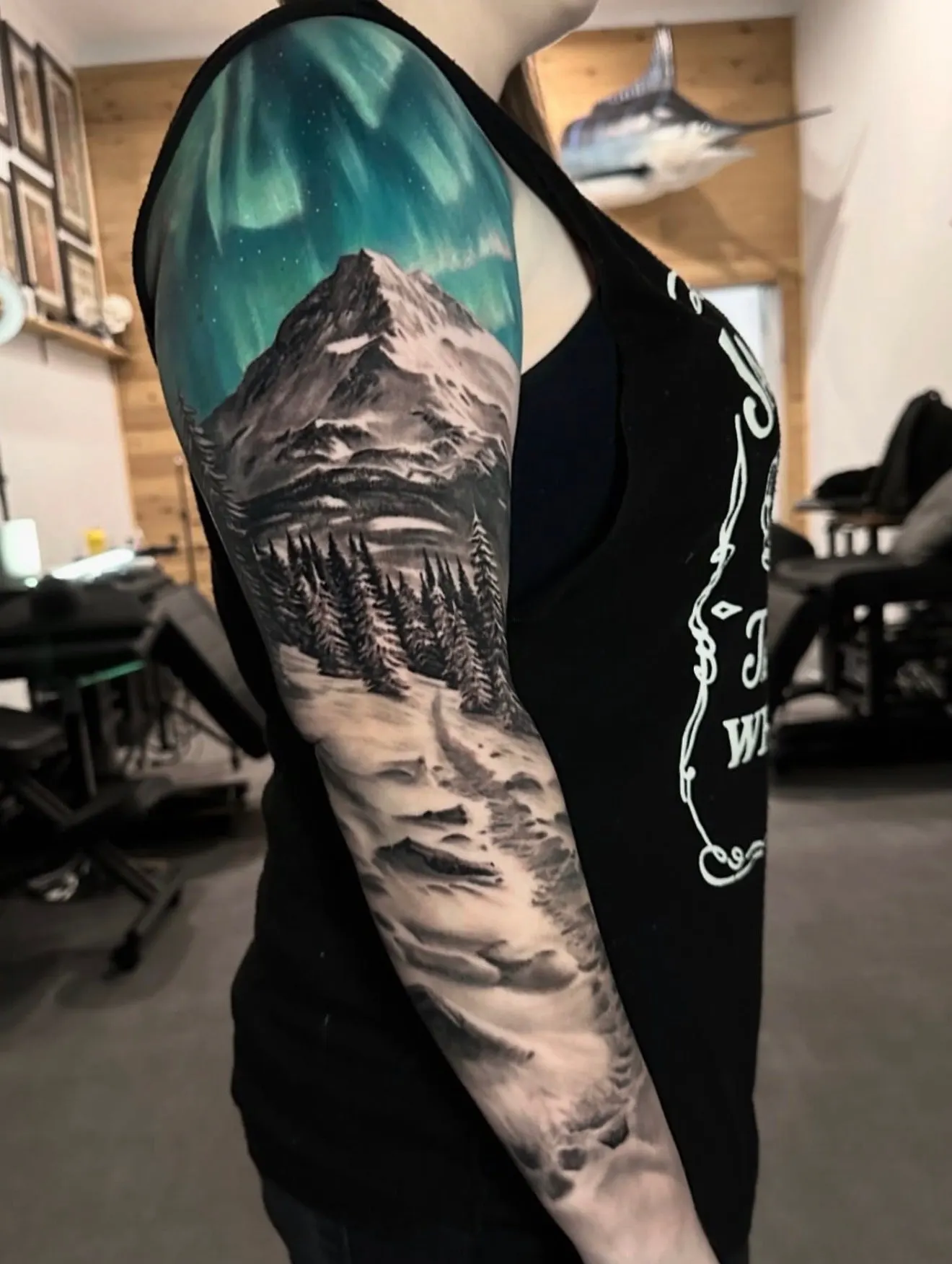
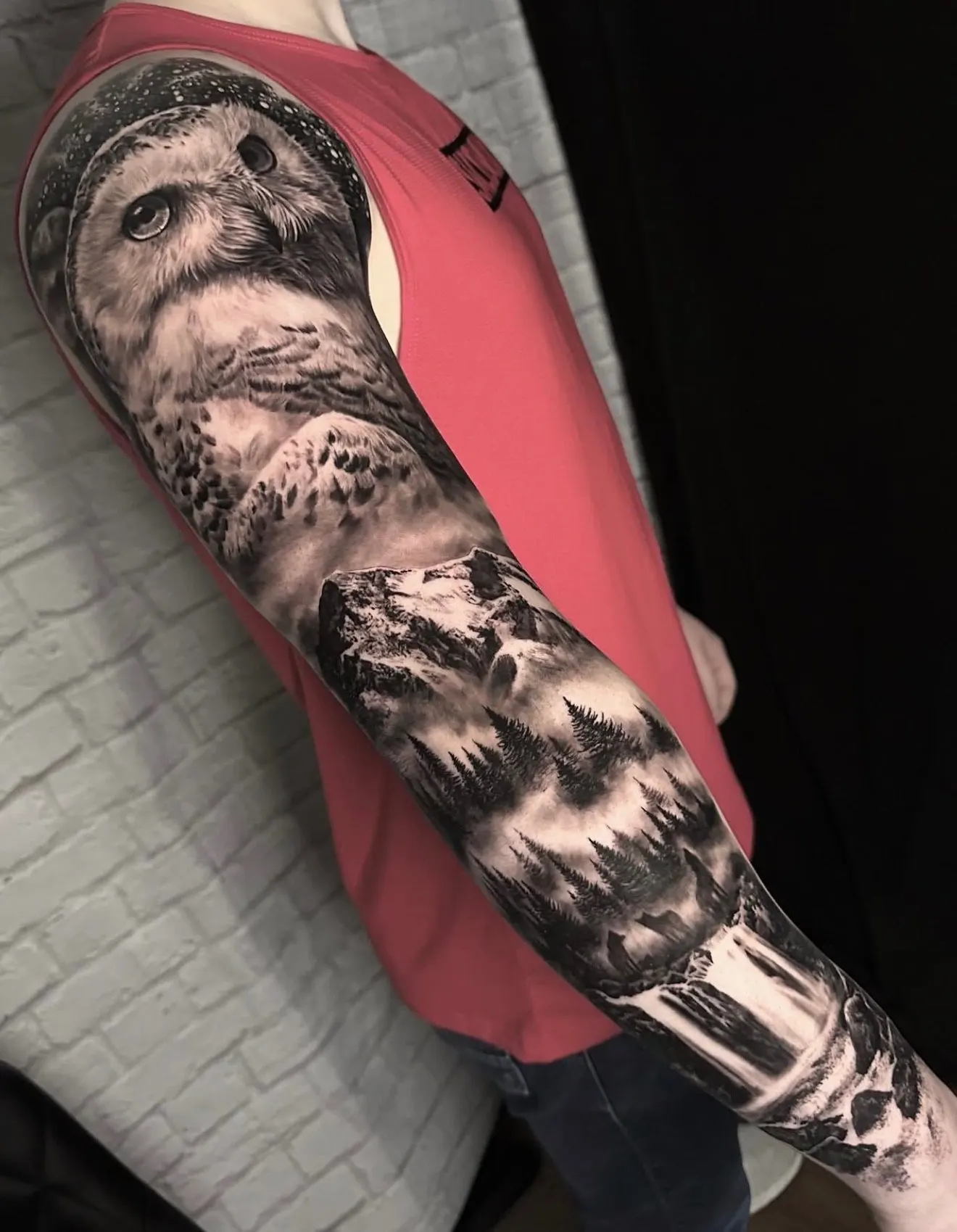
Realism is one of the slowest styles to tattoo. Smooth grey wash, soft transitions, fur, skin texture and reflections are built up in layers. Fine detail packed into a small space also blurs over time, which is why realism artists often suggest going a little bigger.
Black and grey or colour
Colour often takes longer than black and grey, because each colour is layered and saturated so it heals evenly. Airtasker’s guide puts typical colour work around $50 an hour higher than black and grey.
Placement
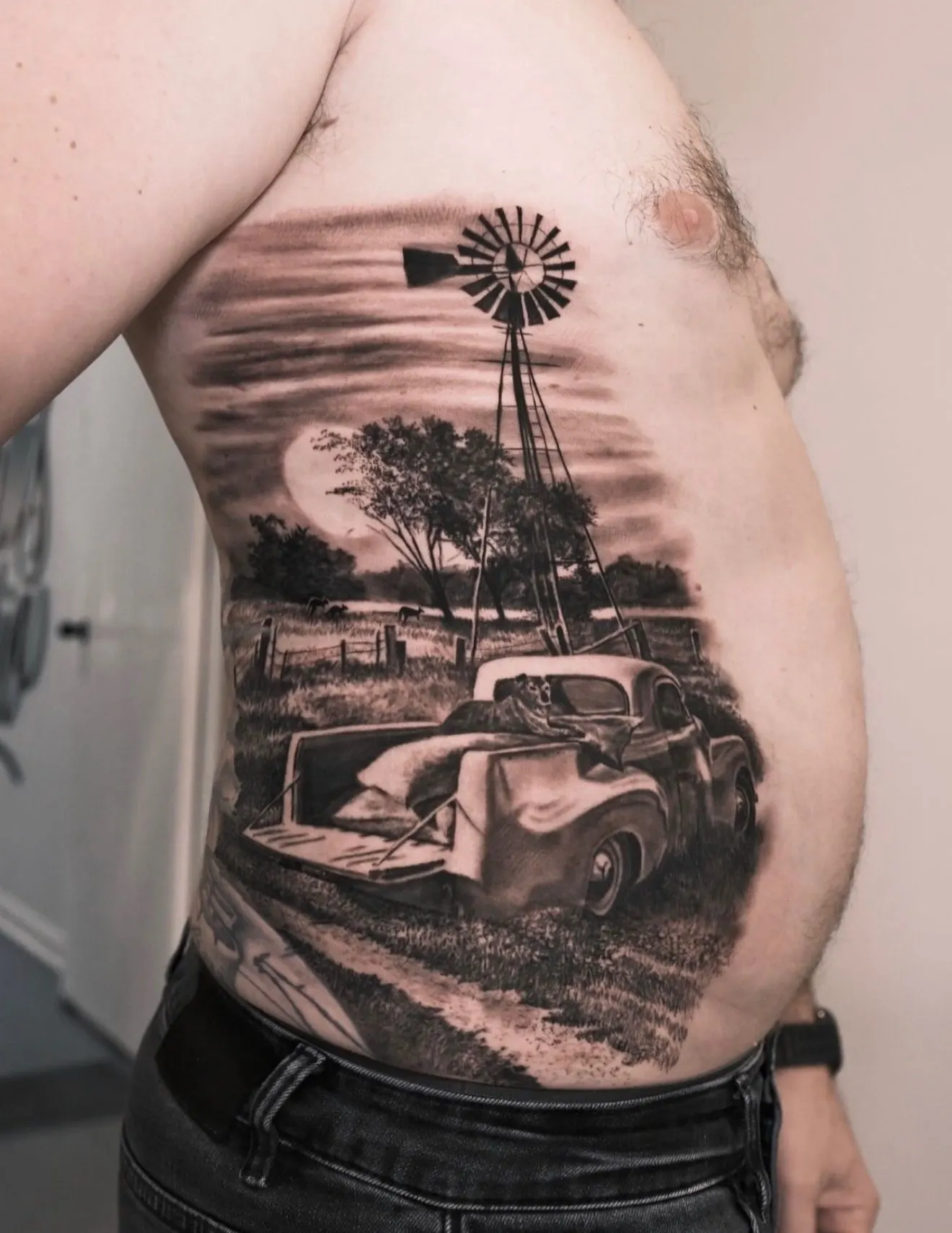
Some areas are slower to tattoo: ribs, stomach, hands, feet, neck and the inner arm all stretch or move more, and clients often need more breaks. A piece on the ribs can take noticeably longer than the same design on the outer forearm.
The artist
Experience and demand drive rates. Junior artists charge less; senior and specialist artists with long waitlists charge more. With realism, you’re paying for years of practice in one specific, unforgiving style.
Cover-ups and reworks
Covering an old tattoo usually means a larger, darker design and more planning, so it often takes longer than a fresh piece of the same size. See cover-ups and reworks for what’s possible.
Where you live
Studios in Sydney and Melbourne tend to sit at the top of the hourly range. Plenty of clients travel to a specialist rather than settle for whoever is closest. See travelling to Dylan.
Hourly rate or day rate: which is better value?
For a small piece, an hourly rate or flat price makes sense. For a large realism project, a day rate is usually better value, for a few reasons.
- Consistency: big areas of shading are done in one go, so the tones match across the piece.
- Fewer sessions: one full day often gets more done than two short ones, because setup and warm-up only happen once.
- Clear costs: you know exactly what each day costs before you start, with no watching the clock.
Read more about why realism is tattooed in full days.
What a realism project actually costs
At a day rate, the maths is simple: the number of days multiplied by the rate. Every design is different, so these are illustrations only, not quotes.
| Project | Example time | At $2,000 a day |
|---|---|---|
| Forearm or calf piece | 1 full day | $2,000 |
| Half sleeve | 2 to 3 full days | $4,000 to $6,000 |
| Full sleeve | 4 to 6 full days | $8,000 to $12,000 |
| Full back piece | 6 to 10+ full days | $12,000 to $20,000+ |
These are typical ranges, not quotes: the number of days for your piece is confirmed when your application is approved, before you pay the deposit. You’ll get an estimate of days once Dylan has seen your idea, size and placement. Large pieces are spread over several months, with a few weeks between sessions so each section can heal, which also spreads the cost.
See real examples in sleeves and large-scale work.
Costs people forget to budget for
- The deposit: paid upfront to secure your date. Check the booking terms for how deposits work if you need to move a date.
- Aftercare: a gentle unscented wash, a thin balm and a high-SPF sunscreen once it’s healed. Not expensive, but not optional. See the aftercare guide.
- Travel and accommodation: if you’re coming from further away, add fuel, flights and a night or two nearby. See where to stay.
- Time off work: a full day in the chair is a full day off, and some people take the next day off too.
- Touch-ups: ask your artist about their touch-up policy before you book.
Do you tip tattoo artists in Australia?
Tipping isn’t expected in Australia, and nobody will think less of you for not tipping. If you’re thrilled with the work, a tip, a thank-you card, a healed photo and a good review are all appreciated. The healed photo and the review often mean the most.
Red flags when comparing prices
- Realism that seems too cheap: it usually means rushed work, an inexperienced artist or a design copied from the internet.
- A price before anyone has seen your idea: a large custom piece can’t be priced properly without size, placement and references.
- Payment requests by DM: scammers impersonate popular artists on Instagram. Dylan only takes bookings through his booking page and never asks for payment by DM.
- No healed photos: any artist can make a fresh tattoo look good in a photo. Ask to see healed work. Read fresh vs healed.
How to budget for a large piece
- Decide on the whole project first, not just the first session, so you know the total you’re working towards.
- Ask for an estimate of days, then multiply by the day rate.
- Book sessions a few weeks apart, and save for each one in between.
- Set aside a little extra for travel, aftercare and the unexpected.
Getting a quote from Dylan
Books open a few times a year, and the waitlist hears first. When you apply, include your idea, the size and placement, and a few clear reference photos. That’s enough for Dylan to estimate the number of days. Join the waitlist, or read more about the day rate and sessions.
Common questions
Is $2,000 a day expensive for a tattoo?
For specialist realism, it’s in line with what in-demand artists charge. A full day is usually six to eight hours of tattooing, which works out at roughly $250 to $330 an hour. That sits with the expert end of the market, where Airtasker’s guide lists rates from around $300 an hour, and you get the consistency of a single long session.
Why do realism tattoos cost more?
Because they take longer. Realism is built up in many soft layers to get depth, texture and smooth transitions, and it takes years to learn to do well.
Do tattoo artists charge for the design?
Many custom artists include design time in the price of the tattoo; some charge a separate drawing fee for large or complex designs. Ask before you book. Here, every piece is drawn by Dylan for the client as part of the booking; if an idea needs unusual design time, you’ll be told when your application is approved, not after.
Can I pay for a sleeve in instalments?
Large pieces are paid session by session, which spreads the cost naturally over the months it takes to finish.
How much is a small tattoo in Australia?
Usually somewhere between the studio’s minimum and around $300, depending on detail and the artist. Dylan focuses on larger realism pieces booked by the day.
Source for typical Australian prices: Airtasker, How much does a tattoo cost? (2026).