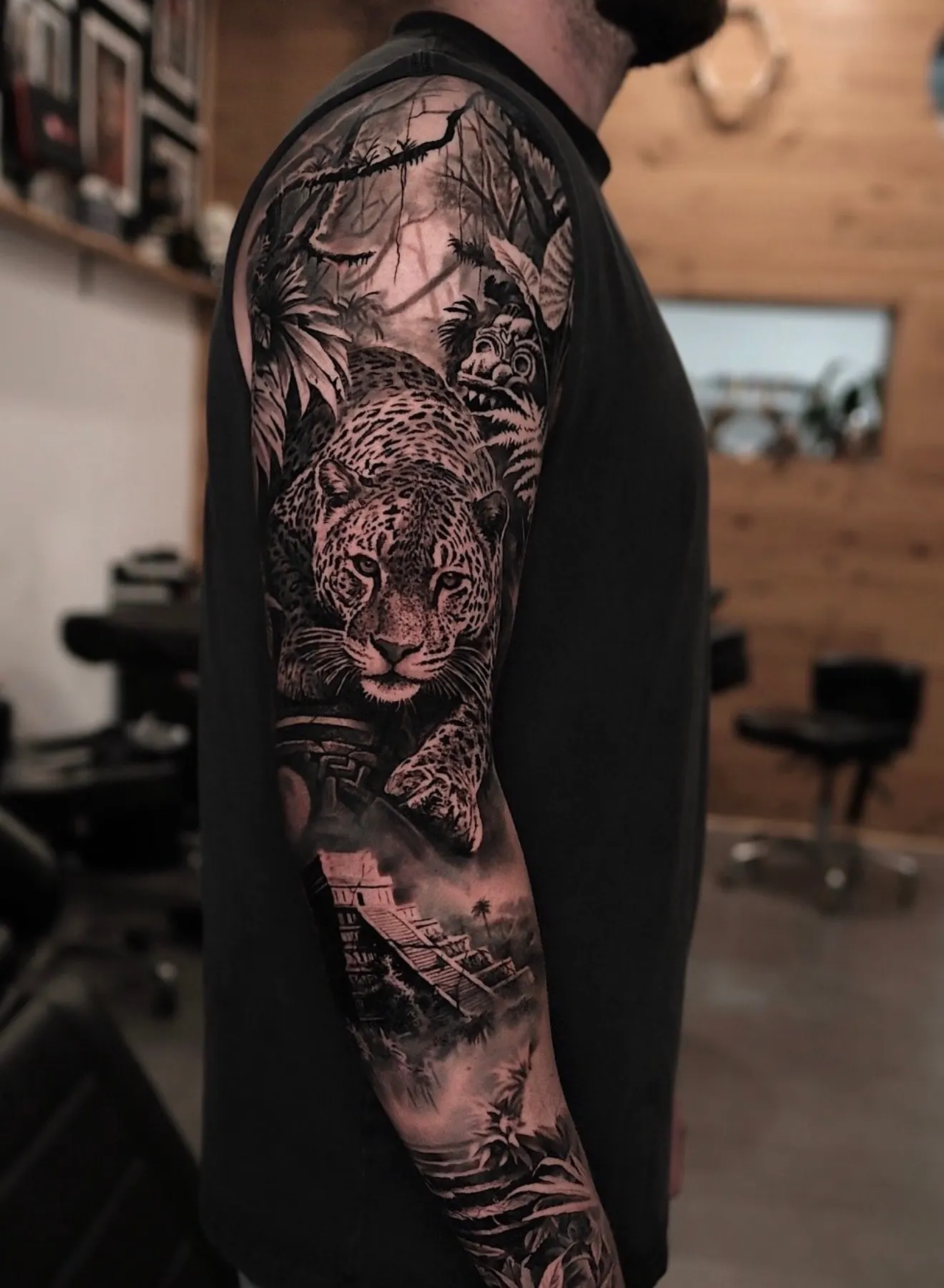
A great sleeve isn’t a collection of separate tattoos. It’s one composition that wraps the arm, with a clear main subject, supporting elements and a background that ties it together. Here’s how to plan one.
Start with one main subject
Pick the thing you care about most: a marlin, a tiger, a wave, a portrait. Everything else is designed around it. Trying to give five subjects equal weight is the fastest way to end up with a cluttered arm.
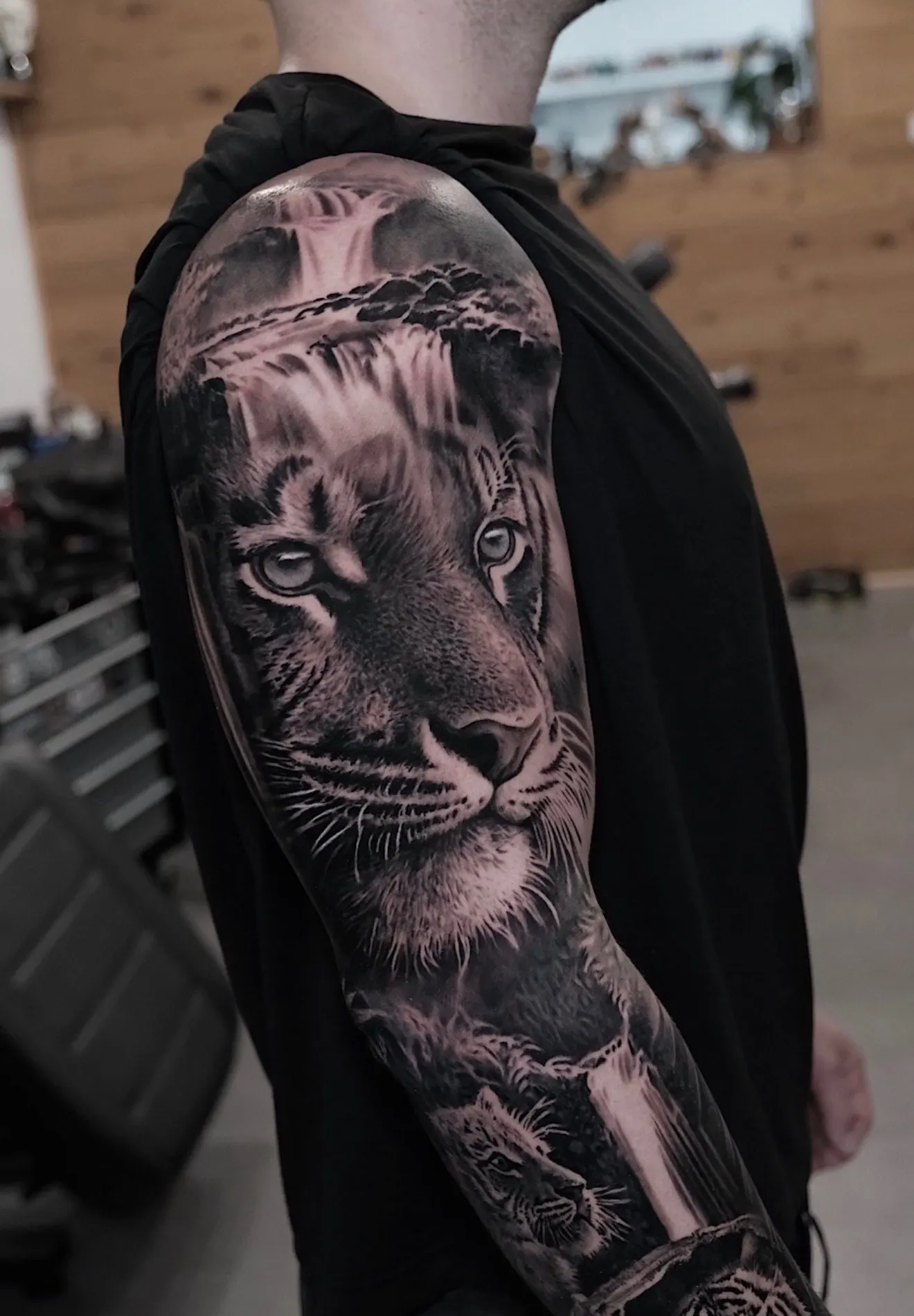
Think about flow
Arms are cylinders, not flat pages. Good realism sleeves follow the muscle: subjects sit on the outer forearm and upper arm where they’re seen most, and backgrounds like water, cloud or forest wrap around the inner arm. In practice the stencil is built on the arm, not on paper: the main subject is positioned where it reads naturally when your arm hangs, and the background is drawn to move with the bend of the elbow instead of fighting it.
References matter
Bring photos of the actual subject: the animal, the place, the person. Clear, well-lit photos give a realism artist far more to work with than screenshots of other people’s tattoos.
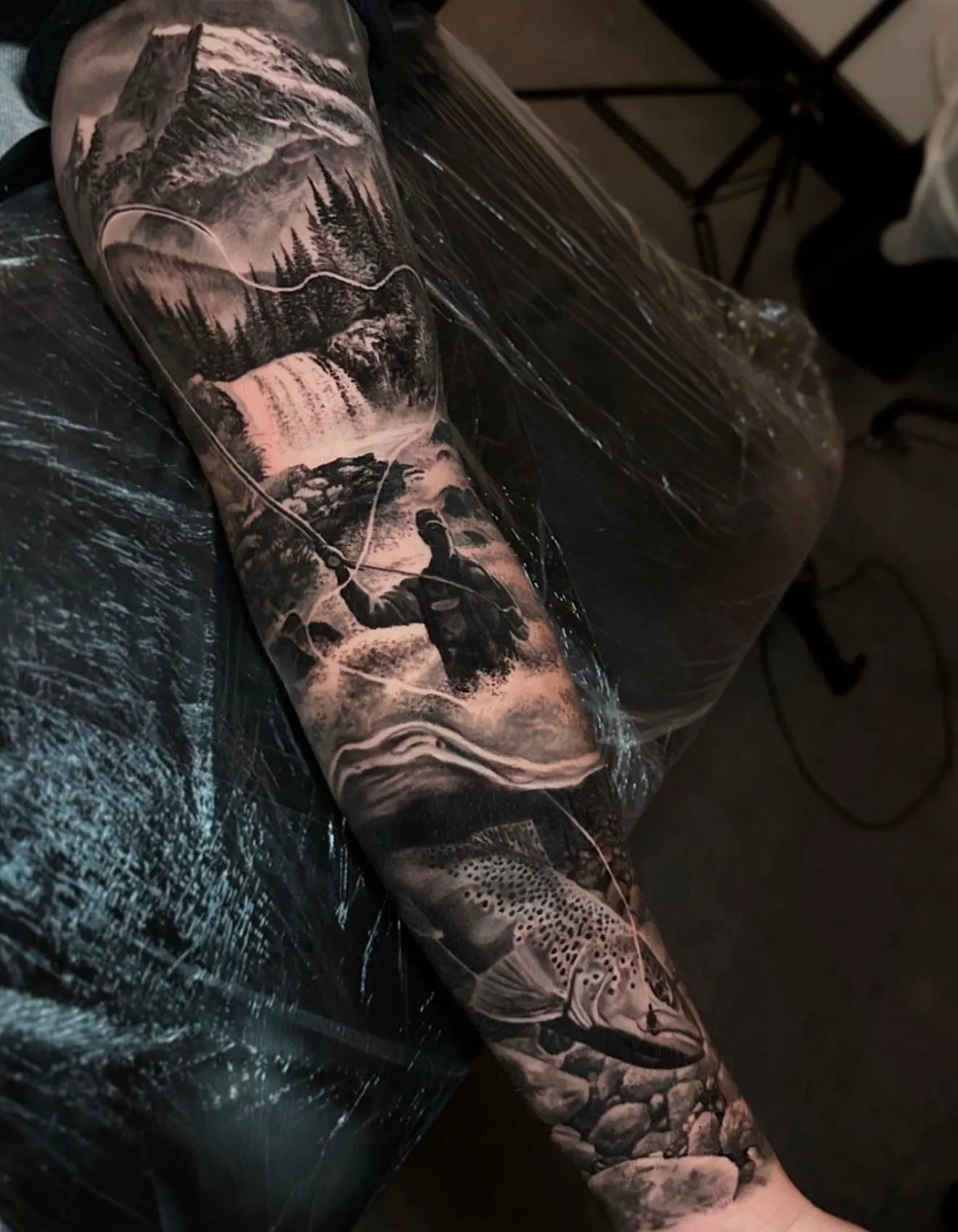
Black and grey or colour?
Both work. Black and grey suits moody, high-contrast pieces and ages very well. Colour suits sunsets, reefs and anything where the colour is the point. Some sleeves mix both. Most of the work on this site is black and grey because it holds contrast and detail for the longest; colour is used where it does something black and grey can’t, like a sunset over the homestead or the glow of an aurora.
How many days?
A full realism sleeve usually takes several full days (often four or more for a full arm, depending on size and detail), booked a few weeks apart so each section heals before the next. Budget for the whole sleeve from the start, at the current day rate of $2,000.
Start with a conversation
Half sleeve or full?
A half sleeve is a complete composition on its own, usually the upper arm or the forearm, and it can be extended later if the design is planned with that in mind. If you think you might want the full arm eventually, say so at the start: it changes where the horizon lines and main subject sit.
The order sessions happen in
Large pieces are built main subject first, then the supporting elements, then the background that ties it together. Each session is a complete, healed-looking section rather than a faint outline of everything, so the arm looks finished at every stage even if life gets in the way between dates.
You don’t need a finished drawing. An idea, a placement and a few references are enough. Join the waitlist to apply when books open.